
How to do Pendlay Rows
The Pendlay row is a barbell row where every rep starts from the floor. You hold your back flat and close to parallel with the ground, pull the bar to your chest, then put it all the way down before the next rep. It’s named after the weightlifting coach Glenn Pendlay, who made it popular.
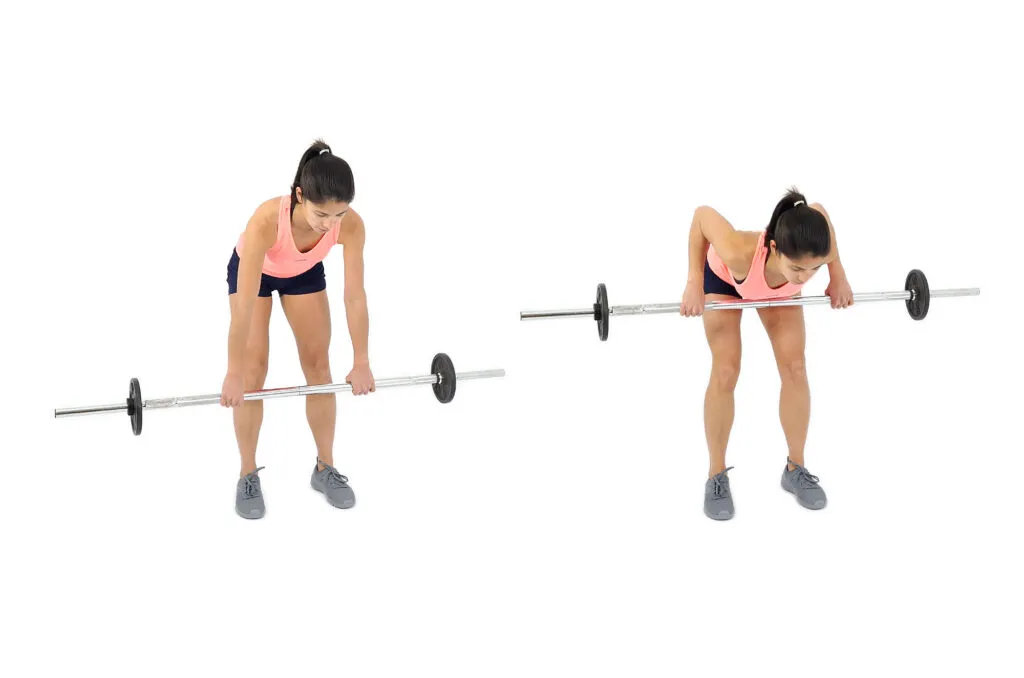
1. Stand with the barbell over the middle of your feet, feet about hip-width apart
2. Bend forward at the hips, with a slight bend in your knees, until your back is close to parallel with the floor. Keep it flat, with your neck in line with your spine
3. Grip the bar with an overhand grip, hands slightly wider than your shoulders. This is the starting position
4. Pull the bar up to your lower chest by driving your elbows back and squeezing your shoulder blades together. Keep your back still, so only your arms move
5. Lower the bar until it rests on the floor. Let it settle, reset your back, and pull again. Every rep starts from the floor
Muscles worked
- Main muscles
- Middle Back/Lats
- Also works
- Biceps
- Equipment
- Barbell
Benefits
Starting each rep from a dead stop means there’s no momentum to help, so your upper back has to produce the force from scratch every time. That makes it a strong builder for your lats and mid-back, with your biceps and the back of your shoulders helping.
Holding your torso flat also trains your lower back and hamstrings to stay locked in place, which helps your deadlift.
Form tips
- Set your back flat before every rep, not just the first one.
- Pull to your lower chest, with your elbows travelling back past your body.
- Keep your hips at the same height throughout. If they rise as you pull, the weight is too heavy.
- Let the plates come to rest on the floor between reps. Bouncing them turns it back into an ordinary row.
Variations
- Easier: use a lighter bar and stand a little more upright, which makes it a bent-over barbell row.
- Harder: pause for a second with the bar at your chest on every rep.
- With dumbbells: bent-over dumbbell rows let each arm pull on its own.